
1. Introduction — The Actual Problem in Practice
In applied strength training, the central challenge is rarely a lack of knowledge. Most qualified professionals are familiar with the basic principles — overload, specificity, progression, and recovery.
The difficulty lies more in implementation: translating these principles into training programs that are both effective and sustainable in a real-world context.
In practice, programs often develop in an unfavorable direction: too complex, too variable, or not sufficiently oriented to the actual needs of the individual. This is less a problem of science than one of prioritization and application.
Current evidence paints a clear picture:
Training results are primarily determined by regular exposure to meaningfully structured load — not by the complexity of the chosen method.
This position is supported by consensus papers from the American College of Sports Medicine, which highlight adherence, adequate load, and progressive increase as central factors for long-term adaptations (ACSM, 2026).
Against this background, the role of the trainer shifts:
- Science describes the mechanisms of adaptation
- Program design structures their application
- Coaching determines the quality of implementation
2. From Exercise Thinking to System Thinking
A common limitation in practice is thinking in individual exercises instead of structured systems.
Exercises are necessary — but their effectiveness only arises in the context of an overarching training system. What is crucial is not the individual exercise, but how it is:
- combined
- controlled
- and developed over time
In practice, this means:
An extensive exercise repertoire is less decisive than a clear system for organizing these exercises.
Without structure, variation becomes randomness.
With structure, even a limited number of movements can produce effective adaptations.
This corresponds to scientific findings that training variables such as load, volume, and effort level are only effective if they are coherently organized over time (Schoenfeld et al., 2017).
A functioning training system is characterized by the fact that it:
- is geared towards a clear goal
- enables measurable progression
- is reproducible across units and phases
The transition from exercise thinking to system thinking is a central developmental step in professional practice.

3. Movement Patterns as a Basis
Modern training concepts increasingly organize strength training along movement patterns instead of isolated muscle groups. This structure corresponds to both biomechanical relationships and the demands of real-world movements.
Human movement is fundamentally coordinated. Activities such as lifting, walking, or changing direction require the interplay of multiple joints and muscle groups.
A training approach that maps these patterns therefore has higher transferability to functional requirements.
In practice, this results in a structured classification of basic movement patterns:
- knee-dominant movements (e.g., squat variations)
- hip-dominant movements (e.g., hip extension)
- single-leg patterns (e.g., lunges)
- pushing movements
- pulling movements
- rotational movements
- core stabilization
Organizing along these categories ensures that relevant movement requirements are systematically covered.
An example of such a systematization is our DAILY7 exercise concept. It is based on the classification of human movement into seven basic patterns — Squat, Lunge, Hinge, Push, Pull, Rotation, and Plank. This reduction allows complex movement requirements to be traced back to a few central categories and trained systematically.
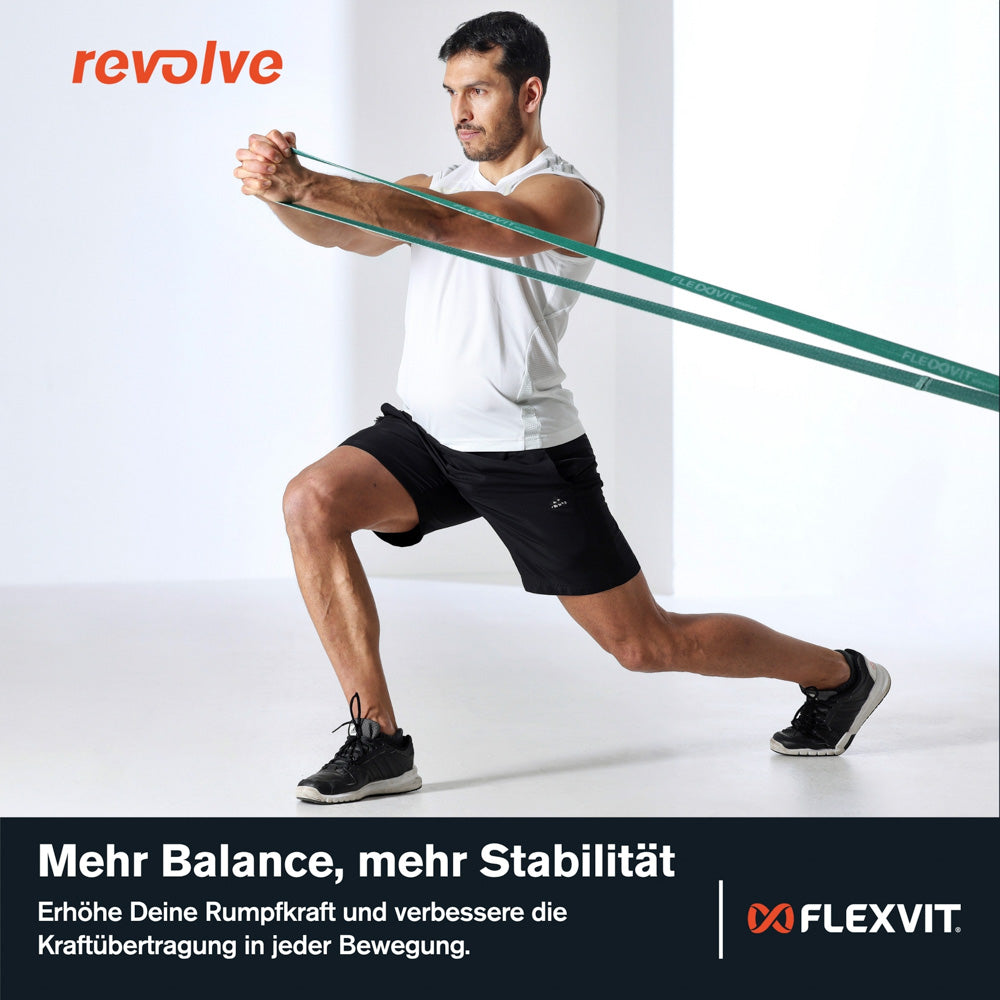
The DAILY7 exercise concept was specifically developed to implement this structure in training with elastic resistance bands. The focus is not on the individual exercise, but on regular exposure to fundamental movement patterns — regardless of the training environment or available equipment.
From a training science perspective, this approach directly follows current insights: What is crucial is not the variety of isolated exercises, but the repeated, structured loading of central movement patterns.
Further information on the concept:
https://flexvit.band/pages/daily-7-trainingskonzept
4. Importance of Frequency and Movement Exposure
Classic strength units represent only a part of the total stimulus. The total amount of relevant movement throughout the week has a significant impact on adaptation processes — especially in general and clinical populations.
ACSM guidelines show that even moderate increases in training frequency can lead to significant improvements in strength, function, and health (ACSM, 2026).
An often underestimated factor thus becomes clear:
Consistency means not only intensity, but also regular movement exposure.
For practice, it follows that training should not be exclusively limited to isolated units. Rather, it is about creating repeated contact with fundamental movement patterns — both in training and in everyday life.
Our DAILY7 exercise concept offers a concrete and practical structure for this. The underlying idea is to address the seven basic movement patterns regularly — ideally daily at low to moderate intensity.
The decisive difference to classic training programs is not primarily in the exercise selection, but in the frequency of movement exposure. While traditional strength training is often limited to a few, clearly defined units per week, such an approach extends the training stimulus through repeated activation of central movement patterns in everyday life.
In practical implementation, this means:
- systematic repetition of basic movements
- integration into different contexts (training, daily life, rehabilitation)
- flexible adaptation to individual circumstances
The DAILY7 exercise concept thus exemplarily shows how training science principles — especially specificity, frequency, and repetition — can be transferred into a simple but effective training structure.

5. Program Design as Load Management
Once the movement patterns are defined, the focus shifts to controlling the load. Program design is essentially the organization of stress over time.
Central variables are:
- Intensity — magnitude of the load
- Volume — amount of work performed
- Density — distribution of the load over time
- Complexity — coordinative demands of the movement
These variables jointly determine the training stimulus but must be used purposefully.
The fundamental principle remains unchanged:
The body adapts to the load to which it is repeatedly exposed.
This results in the need to consistently align programs with actual requirements — be it rehabilitation, general fitness, or competitive sports.
The evidence particularly emphasizes:
- targeted load selection (strength vs. hypertrophy)
- sufficient weekly volume
- training close to muscle failure for hypertrophy-oriented adaptations
- sufficient rest for performance maintenance
(Grgic et al., 2018; Schoenfeld et al., 2017)
6. Progression Beyond Load
Progression is often reduced to increasing external load. This is central especially for maximal strength, but it only represents one dimension of increasing training demands.
In practice, progression often also includes:
- higher movement demands
- more complex coordination
- increased control under load
This is particularly relevant in:
- rehabilitation
- return to sport
- general physical preparation
An expanded understanding of progression includes:
- increasing external load
- increasing work volume
- expanding the range of motion
- integrating multi-planar requirements
- higher movement speed or explosiveness
- reducing external stabilization
The combination of load and complexity progression allows for differentiated and individualized training control.

7. Simplicity and Minimal Effective Dose
A consistent research finding is that effective training does not require excessive complexity.
Especially in non-highly specialized populations, even small but targeted training volumes can produce significant progress.
Studies show that even minimally dosed strength training programs, with sufficient intensity and regularity, enable strength and muscle gains (Schoenfeld et al., 2019).
For practice, this means:
An effective training session can often be reduced to:
- a central main exercise with high relevance
- a supplementary movement to support the pattern
- a targeted accessory or isolation segment
This structure allows for an effective training stimulus while maintaining high feasibility.
The underlying principle:
Effectiveness arises not from complexity, but from consistency and quality of execution.
8. Classification of Resistance Bands
Within a principle-based approach, resistance bands are not an independent training system, but a versatile means of structuring load.
Their value lies in their flexible applicability across different contexts — from early rehabilitation to performance-oriented training.
Typical areas of application:
- dosed introduction of external load
- supplementary strength and hypertrophy training
- activation and movement preparation
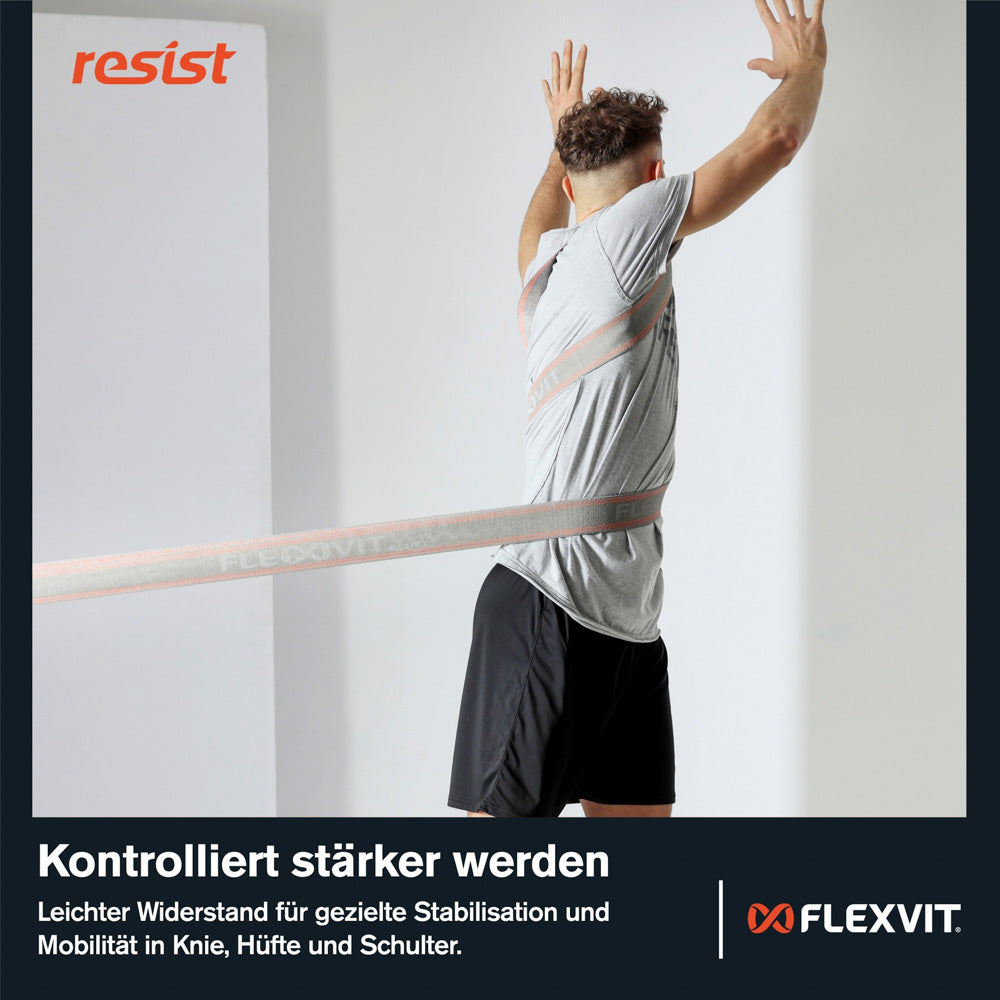
- rotational and multi-planar movements
- training under restricted conditions
These applications result from their properties:
- progressive resistance with increasing stretch
- reduced load in biomechanically unfavorable positions
- high flexibility in use
- easy scalability
At the same time, there are limitations:
- limited maximum load capacity
- limited precision of load control
- dependence on setup consistency
Against this background, it also becomes clear why our DAILY7 exercise concept is particularly well combinable with elastic resistance. Due to their flexible application and the ability to generate resistance in different directions, fundamental movement patterns can be trained regularly with little organizational effort.
This specifically supports approaches that are not limited to isolated training sessions but aim for continuous, structured movement exposure in everyday life.
9. From Function to Capacity
A central shift in perspective of modern training approaches is not just restoring function, but building up load reserves.
Health does not merely mean freedom from symptoms, but the ability to tolerate stress, adapt, and remain capable under changing conditions.
This view also corresponds to recommendations from the World Health Organization, which highlight strength training as an essential component of long-term health (WHO, 2020).
For practice, this means:
Training should aim to:
- increase strength capacity
- improve load tolerance
- expand movement options
- build resilience to fatigue
This establishes a connection between rehabilitation, fitness, and competitive sports.
10. Conclusion — Demands of Theory on Practice
Transferring scientific findings into practice does not require greater complexity — but clarity, structure, and consistent implementation.
Effective strength training in practice is characterized by:
- systematic work with fundamental movement patterns
- progressive and targeted load management
- meaningful combination of different training tools
- continuous adaptation based on individual response
Resistance bands, within this framework, represent a functional and versatile tool that can be used effectively in various contexts when applied purposefully.
What remains crucial is:
Not the method determines the result — but the quality of its application.
References (Original Sources)
American College of Sports Medicine (ACSM)
https://www.acsm.org
ACSM Guidelines (2026 update overview)
https://acsm.org/resistance-training-guidelines-update-2026/
ACSM Physical Activity Guidelines
https://www.acsm.org/education-resources/trending-topics-resources/physical-activity-guidelines
World Health Organization (WHO)
https://www.who.int/publications/i/item/9789240015128
Schoenfeld, B. J., et al. (2017)
https://pubmed.ncbi.nlm.nih.gov/27433992/
Schoenfeld, B. J., et al. (2019)
https://pubmed.ncbi.nlm.nih.gov/30153194/
Grgic, J., et al. (2018)
https://pubmed.ncbi.nlm.nih.gov/26605807/
Grgic, J., et al. (2022)
https://pubmed.ncbi.nlm.nih.gov/36334240/
Frequently Asked Questions about the Practical Implementation of Strength Training
Why does strength training often fail in practice, even though the theory is known?
The main problem is not a lack of knowledge, but implementation. Training programs are often too complex, insufficiently structured, or not adapted to actual requirements. A clear prioritization of the most important training variables is crucial.
What is more important: exercise selection or training system?
A structured training system is significantly more important than the individual exercise. Exercises only unfold their effect in the context of progression, repetition, and systematic load control.
Why should training be organized around movement patterns?
Movement patterns reflect the reality of human movement. Since real movements involve multiple joints and muscle groups simultaneously, a movement pattern-based approach is more functional and transferable than isolated muscle training.
What is FLEXVIT's DAILY7 exercise concept?
The DAILY7 exercise concept is a structured training approach based on seven fundamental movement patterns: Squat, Lunge, Hinge, Push, Pull, Rotation, and Plank. The goal is to train these patterns regularly and systematically — regardless of the training environment or equipment.
Why is training frequency more important than many people think?
In addition to intensity and volume, the frequency of movement exposure plays a central role. Regular activation of fundamental movement patterns improves strength, coordination, and resilience in the long term.
How does DAILY7 differ from classic training programs?
While classic programs often focus on a few intense sessions per week, DAILY7 aims for regular, low- to moderate-intensity repetition of fundamental movements. This creates a continuous training stimulus.
How can resistance bands be effectively integrated into training systems?
Resistance bands are particularly suitable for supplementary training, movement preparation, rehabilitation, and multi-directional loading. In concepts like DAILY7, they enable a flexible and everyday implementation of structured training principles.
What does "minimal effective dose" mean in strength training?
The minimal effective dose describes the smallest training volume necessary to induce adaptations. Studies show that even simple, consistently performed programs enable significant progress.